The visual blueprint that shapes your entire brand shoot.
A moodboard is more than a collage of pretty images.
It’s the visual foundation of your brand shoot – the place where emotion, strategy, and aesthetics come together before a single photo is taken.
A strong moodboard aligns you and your photographer, clarifies the story you want to tell, and ensures the final images feel cohesive and intentional.
Here’s how to build one that truly supports your brand.
- Start With Your Theme
Your theme (from previous post: https://beyond-the-frame.com/how-to-choose-a-theme-for-your-brand-shoot/) is the anchor.
Before collecting images, revisit your one‑sentence direction.
Examples:
- “Warm minimalism with natural textures.”
- “Soft clarity with a focus on hands and process.”
- “Bold structure with confident shadows.”
Your moodboard should visually express this sentence – nothing more, nothing less.
- Collect Images That Express Emotion, Not Just Aesthetics
A moodboard is not about copying someone else’s style.
It’s about capturing the feeling you want your brand to evoke.
Look for images that communicate:
- light quality
- color palette
- texture
- mood
- pacing
- atmosphere
These emotional cues matter more than specific poses or props.
- Choose 8-12 Images Only
Too many images dilute the direction.
A tight selection creates clarity.
Your moodboard should include:
- 2-3 light references
- 2-3 color palette references
- 2-3 styling or material references
- 1-2 emotional or atmospheric references
This is enough to guide your photographer without overwhelming the vision.
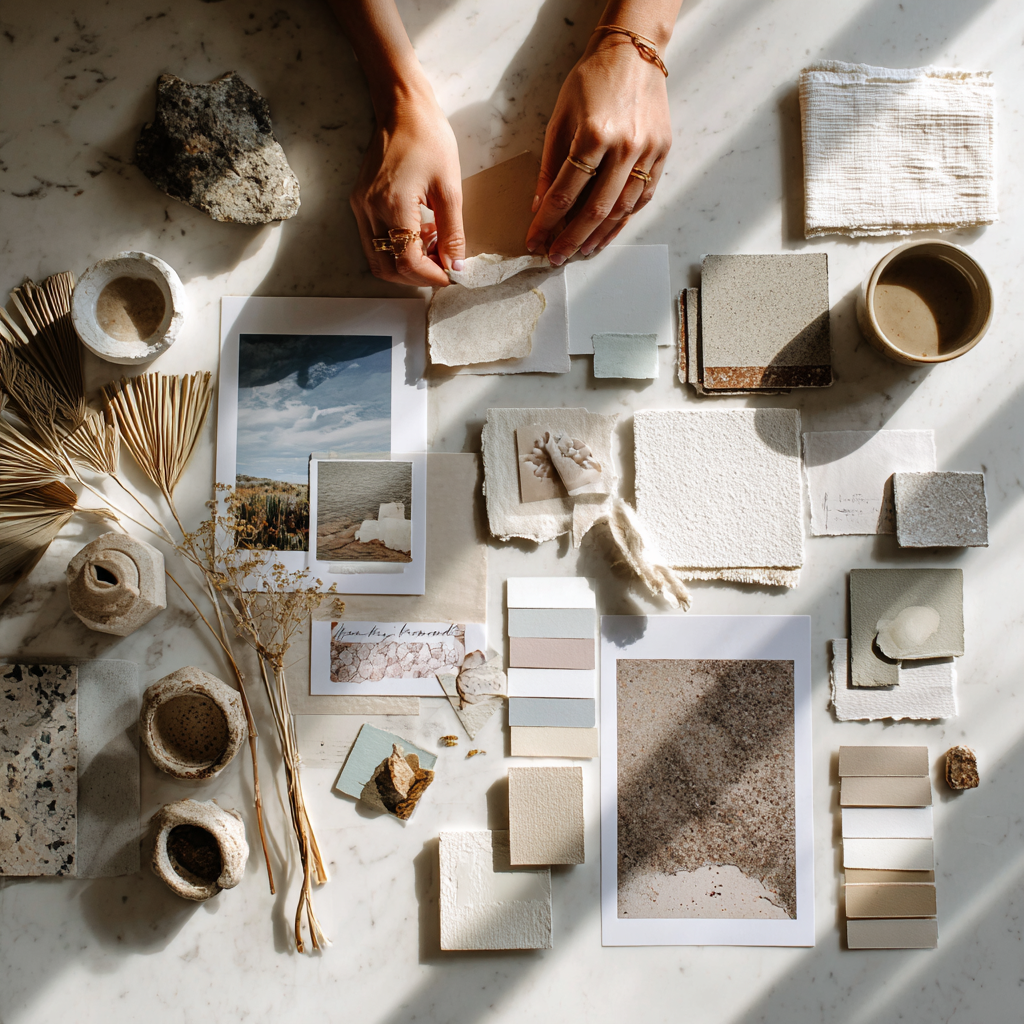
- Mix Photography With Non‑Photography References
Some of the strongest moodboards include:
- interior design images
- textures
- materials
- color swatches
- typography
- natural elements
These help define the world around your brand, not just the photos themselves.
- Avoid Literal Product Examples
If you’re shooting skincare, don’t fill your moodboard with other skincare brands.
If you’re shooting jewelry, avoid copying jewelry campaigns.
Instead, focus on:
- light
- mood
- color
- texture
- composition
This keeps your moodboard original and aligned with your brand identity.
- Arrange Your Moodboard With Intention
A clean layout helps you (and your photographer) see the story clearly.
Organize by:
- light
- color
- styling
- emotion
This creates a visual hierarchy and makes the direction easy to follow.
- Share Your Moodboard Early
Your photographer will use it to:
- plan the lighting
- choose props
- define the color palette
- build the shot list
- prepare the location
- maintain consistency across the shoot
A moodboard is a collaboration tool – not a final decision.
Conclusion
A moodboard is the bridge between your brand’s story and the images you want to create.
It brings clarity, intention, and emotional direction to your shoot – and ensures you and your photographer are building the same visual world.
A strong moodboard doesn’t limit creativity.
It focuses it.