
During my recent business trip to Italy, I found myself thinking surprisingly little about business.
At least, not in the traditional sense.
Of course, I attended meetings, visited companies, explored potential partnerships, and immersed myself in the realities of the Italian market. Yet what stayed with me most were not the conversations around conference tables. They were the countless small encounters with beauty that seemed to appear everywhere I looked.
Not the spectacular beauty that fills travel brochures.
The everyday kind. The kind that quietly accompanies daily life. The kind that nobody talks about because it is so deeply woven into the culture that people almost stop noticing it.
I noticed it while walking through small towns and larger cities alike. Shop windows were arranged with a level of care that suggested someone had invested thought not simply in displaying products, but in creating a visual experience. A simple café napkin carried more design consideration than many corporate brochures I have seen. A fruit display in a supermarket resembled a still-life painting, with bright red tomatoes, deep green basil, golden citrus, and seasonal vegetables arranged in a way that felt naturally beautiful rather than commercially optimized.
Nobody had to do this – yet somebody did. And this kept happening. Again and again.
One afternoon, I came across the remains of a Roman-era villa. Parts of the structure had long surrendered to time, yet traces of decorative details remained visible in stone, fragments of color, proportions, and ornamentation. Even in abandonment, beauty had survived.
It made me wonder how deeply aesthetics must be embedded within a culture when people consider beauty worth creating even in places that may not survive the next century.
The same feeling followed me through museums and churches.
Standing in front of Renaissance paintings, I was struck not only by the technical mastery but by the courage of color itself. Rich reds, deep blues, luminous golds, and vibrant earth tones filled the canvases with a sense of life that remains powerful centuries later.
Beauty was never treated as decoration.
Beauty was treated as meaning.
Outside, autumn was quietly performing its own exhibition. Orange, yellow, red, and brown leaves covered streets, parks, courtyards, and village squares. In many places, seasonal decorations appeared long before any holiday officially arrived. Small shops displayed pumpkins, natural arrangements, and autumnal colors. Garden centers carefully assembled seasonal compositions. Even grocery stores seemed to understand that color could contribute to atmosphere.

And then there were the first hints of Christmas. Small touches at first.
A gold ribbon.
A red ornament.
A window display incorporating green branches and warm lights.
Nothing excessive.
Just enough to suggest that another beautiful season was waiting around the corner.
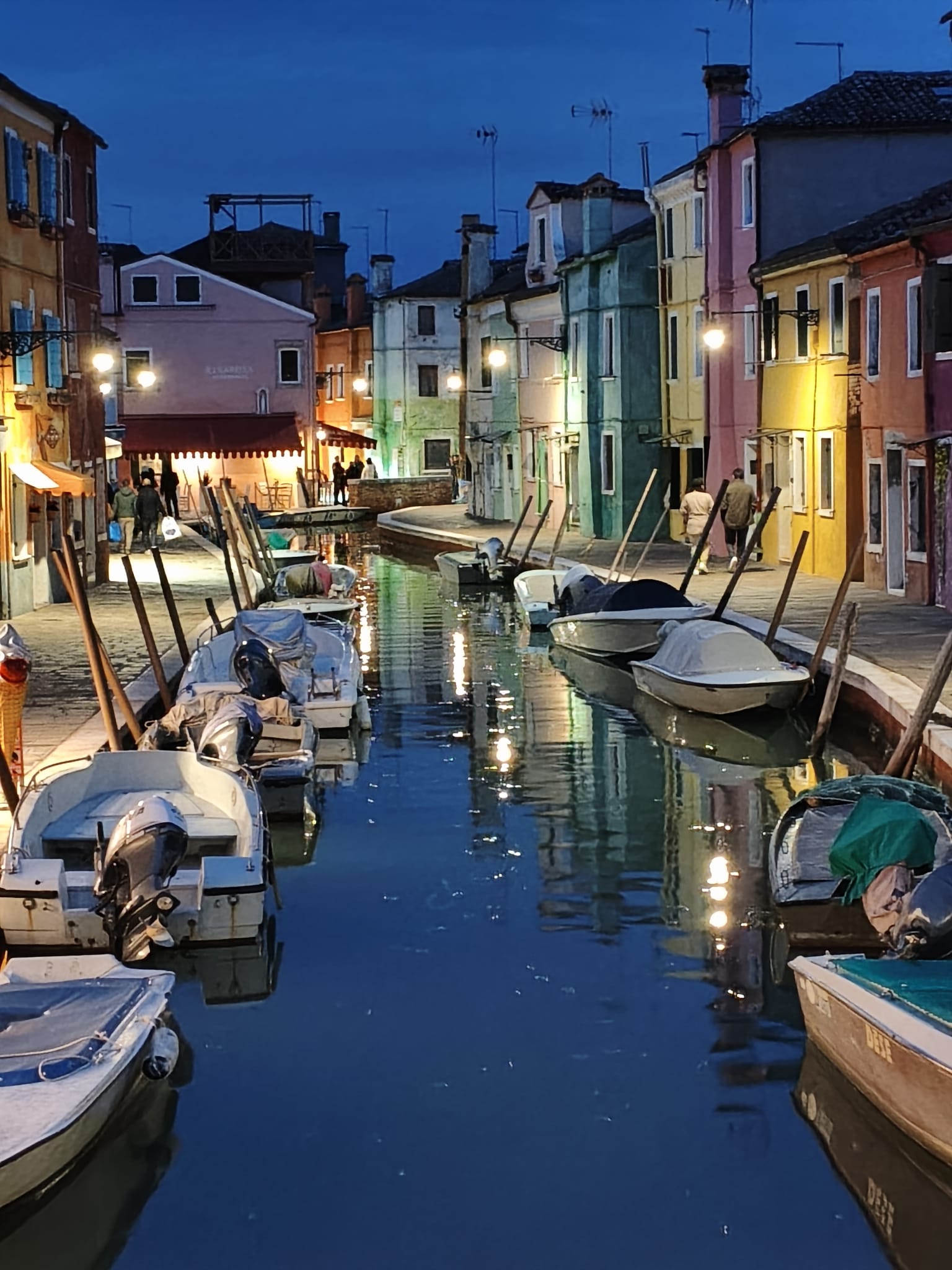
Venice perhaps illustrated this best. At one point I noticed pillows inside a gondola. It was such a small detail that many people would likely walk past without giving it a second thought. Yet the colors, textures, and arrangement transformed a practical object into part of the larger aesthetic story of the city.

Elsewhere, colorful houses stood along canals like carefully arranged pieces of confectionery, each one contributing to a harmonious visual landscape. Their facades reminded me of chocolate wrappings, not because they were identical, but because each colour had been chosen with confidence and character.
It felt impossible to separate beauty from daily life.
And that is perhaps what fascinated me most.
In many places, beauty is treated as a luxury. In Italy, beauty often feels more like a responsibility. Not a responsibility imposed by regulation or social pressure, but one that arises from a collective appreciation for atmosphere, proportion, color, and the emotional impact of the visual world. People seem to understand intuitively that surroundings affect experience. That details matter. That presentation matters. That aesthetics influence how we feel, even when we believe we are making entirely rational choices.
As I reflected on these observations, I realized why this trip resonated so strongly with the philosophy behind BetterSeen.
At its core, BetterSeen is not really about visuals. It is about understanding what visuals do to people. The arrangement of tomatoes in a supermarket does not change their nutritional value. The colors of a shop window do not change the products being sold. A well-designed napkin does not improve the taste of a pizza. Yet all these details influence how people experience the moment: They shape perception, they create emotion, they build memory, they influence behavior.
This is exactly what happens in brands. Many organizations focus on products, specifications, services, and features. All of these matter enormously. Yet customers experience those things through a visual and emotional filter before they ever begin evaluating them rationally.
The visual world surrounding a brand becomes part of the product itself.
Not because it changes what the product is.
Because it changes what the product means.
Perhaps that is the lesson Italy quietly teaches: Beauty is rarely about decoration. Beauty is communication. It tells people what is valued. It signals care. It conveys intention. It transforms ordinary experiences into memorable ones.
And when enough of those moments accumulate, they become something much larger.
They become identity.
For a country.
For a city.
Or for a brand.
Closing Thought
I travelled to Italy to discuss business opportunities. I returned with a renewed appreciation for beauty. Not the dramatic kind – the everyday kind. The kind that appears in windows, colors, textures, flowers, supermarkets, paintings, buildings, and tiny details that most people overlook.
The kind that quietly changes how we experience the world.
And perhaps that is the most powerful visual lesson of all.